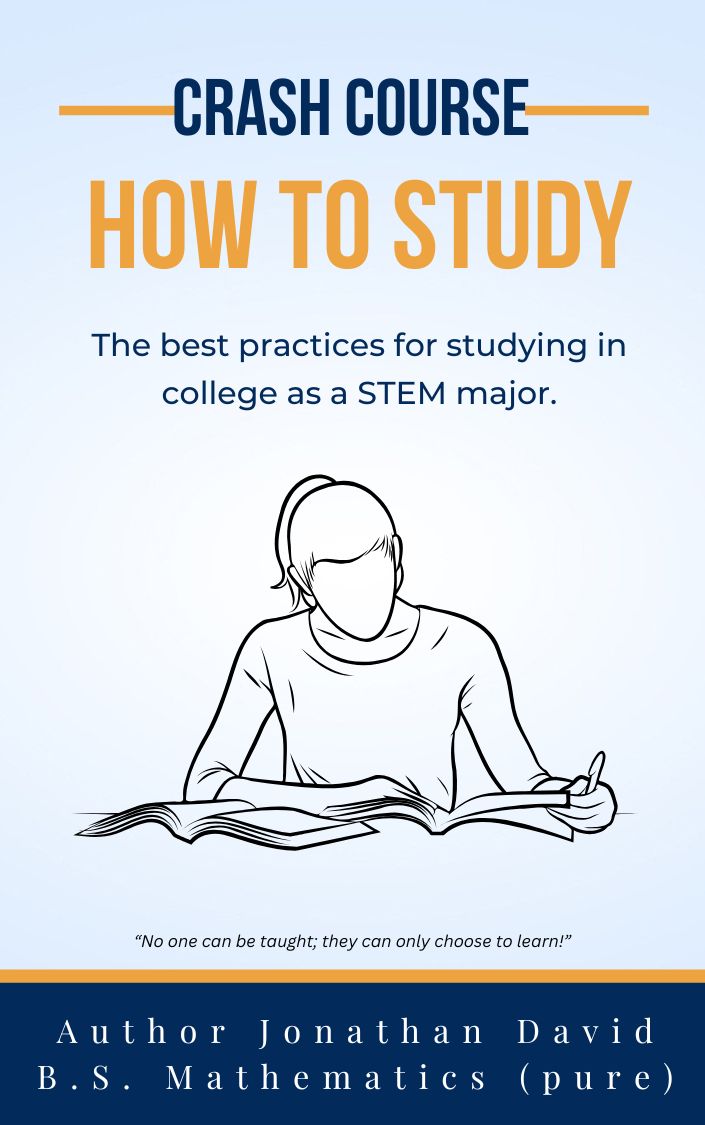

How to Study in College — Partial Playlist
Explore this free preview of How to Study in College by Author Jonathan David. Members receive access to the full playlist and individual posts organized by topic, with written summaries to help you revisit the ideas and apply them to your college experience.
Become a member to explore the complete guide alongside my podcasts, audiobooks, eBooks, courses, and member Q&A—all in one place, at your own pace.
Preview a Summarized Lesson
Page 1 – How to Study in College – If You Don’t Have a Job Offer Senior Year, You Need Grad School
Join Author Jonathan David for a reading of Page 1 of How to Study in College, followed by candid podcast commentary on preparing for employment before graduation. This episode combines audiobook narration, personal experience, and mature humor with a discussion of career readiness and independent learning.
Episode Summary
- Prepare for employment before graduation. Jonathan argues that students should pursue opportunities related to their degrees while still in college, rather than waiting until they receive their diplomas.
- Consider graduate school if you lack a job offer. He recommends continuing directly into graduate study as an opportunity to develop skills, maturity, and relevant experience. This is his proposed approach, rather than a requirement for every graduate.
- Build a résumé with evidence of your abilities. Research projects, internships, work experience, and relevant licenses or certificates are presented as ways to demonstrate preparation beyond holding a degree.
- Think carefully about time away from work or study. Jonathan expresses concern about unexplained résumé gaps and encourages students to use their time intentionally. He also acknowledges that some people may need more time before they feel ready to work.
- Be willing to consider relocation. The discussion highlights how opportunities in specialized fields may require moving beyond a hometown or a smaller local job market.
- Practice solving problems independently. A central theme is that college should develop the ability to investigate, reason, and work through unfamiliar problems without relying on someone else to complete the work.
- Distinguish watching from practicing. Jonathan compares watching worked solutions to listening to a pianist: observing a performance does not replace practicing the skill yourself.
- Use technology without outsourcing your thinking. He criticizes relying on AI and online solutions to get through coursework, arguing that students need to develop abilities they can demonstrate independently.
- Take responsibility for your preparation. The episode encourages students to identify missing skills and take action, rather than depending entirely on professors, lectures, or outside instructions.
- A reflection on his tutoring career. Jonathan discusses his concern that years of producing worked solutions may have encouraged passive learning. He describes this guide as an effort to redirect students toward independent study.
- Commentary beyond college. The conversation also touches on online advertising, corporate influence, public attention, and building a business around a smaller paying audience.
- How the series is being produced. Jonathan plans to narrate one or two pages at a time, followed by commentary. Some episodes will be available publicly, while the full playlist will be available to members on his website.
Become a member to follow the complete How to Study in College course, podcast, and video audiobook, with the full playlist and individual posts organized by topic, including written summaries as new installments are added.
Audience & content notice: Contains strong language, mature humor, and personal opinions; intended for adults. This series offers commentary and guidance on navigating college, rather than subject instruction or a replacement for formal education or individualized career advice. Statements about employment, salaries, résumé gaps, and graduate school reflect the author’s views and experiences, not universal rules or guarantees.